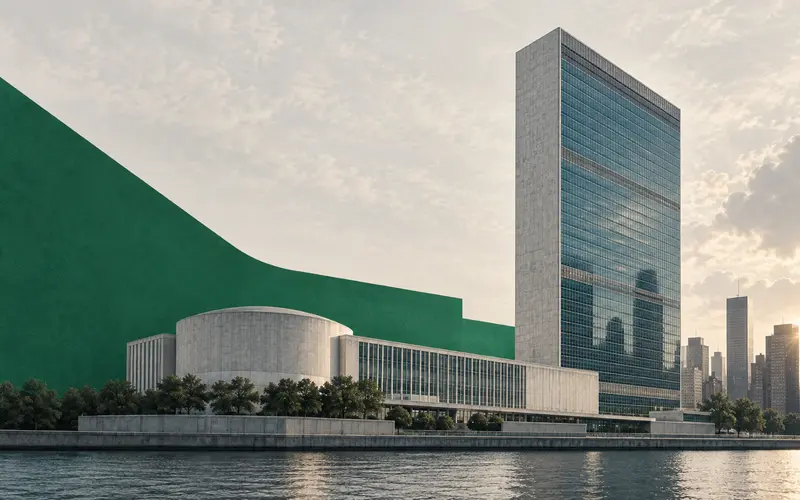
Why Do World Leaders Meet at the UN?
Wednesday, September 23, 2026220 words3 minutes909 reads
New York's UN High-level Week brings nearly 130 heads of state and government into one city. The centrepiece is the General Debate of the 81st General Assembly session, from September 22 to September 28. Leaders state priorities.
The agenda is broad because the problems are connected. Wars, climate change, trade disruption, pandemics and artificial intelligence can affect people beyond one border. The General Assembly gives all 193 member states one vote, so a small island state can speak on the same stage as a major power. Its resolutions usually express collective views or recommendations rather than laws that countries must obey.
This structure explains a common frustration. The UN cannot act like a world government and order countries to end a war. The Security Council can make stronger decisions, but a negative vote from any of its five permanent members can block a decision. When powerful countries have conflicting interests, a shared response can be hard.
Yet the speeches are only one purpose of the gathering. Ministers and diplomats schedule bilateral conversations between two governments. They can raise humanitarian aid, trade, prisoners or ways to prevent a crisis from growing. These talks may not create an immediate agreement, but they create contact. In a divided world, that diplomatic space remains valuable: many problems cannot be managed by one country alone.