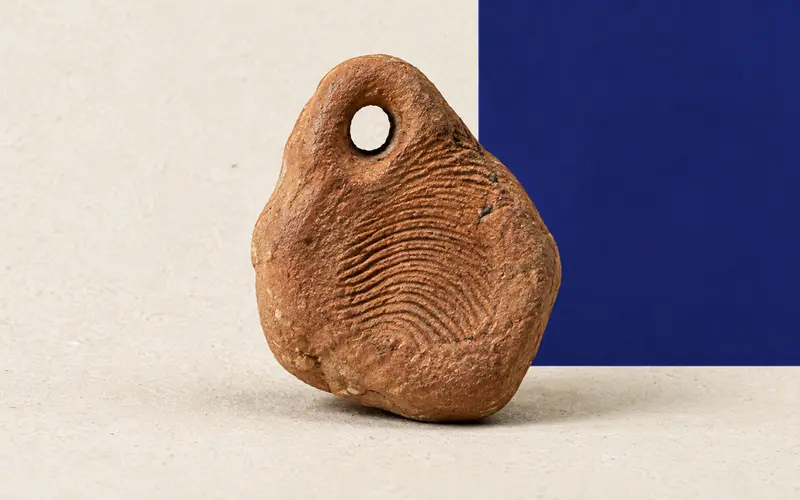
Ancient Clay Beads Hold Children’s Fingerprints
Wednesday, September 23, 2026215 words3 minutes364 reads
Small clay ornaments from the Natufian culture have preserved an unusually personal kind of evidence: the makers' fingerprints. A study examined 142 beads and pendants from Israel, dating from about 15,000 to 11,650 years ago. The objects were made before agriculture and pottery became widespread.
The ornaments included discs, rings, cylinders and forms that resemble plants, including barley, wheat, lentils and peas. Some carried a red ochre coating. Their surfaces also retained fingerprints and palm prints from the people who pressed, pinched and shaped wet clay.
Researchers measured the mean ridge breadth of about 50 prints against modern data. Their analysis identified makers from different age groups. Five of the six ornaments carrying fingerprints were attributed to children or subadults; the other was linked to a young adult or adult female. Clay can shrink as it dries, so the study treats these age estimates carefully, not as exact identities.
The finding does not let archaeologists reconstruct one family's day. It does, however, provide direct evidence that children participated in making personal ornaments. That matters because the objects were part of shared symbolic practices in early settled communities. A small fingerprint does not answer every question about the past, but it connects an abstract culture with a person who once pressed a finger into soft clay.