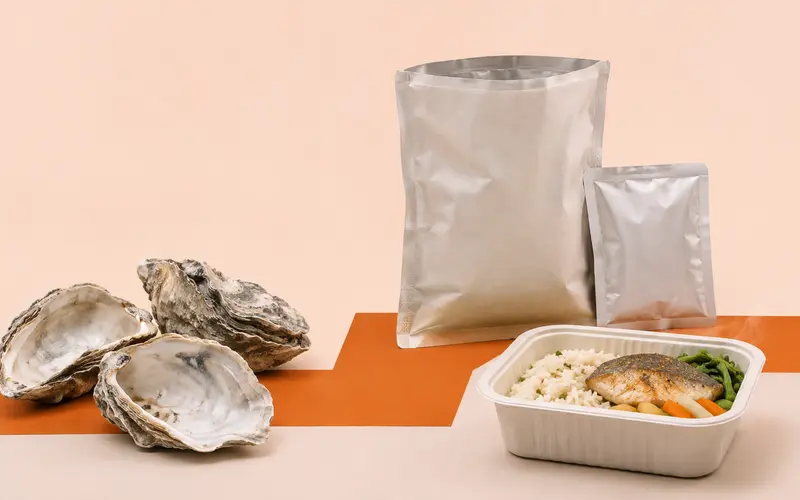
Taiwan Turns Oyster Shells Into Self-Heating Meal Packs
Monday, November 16, 2026214 words3 minutes277 reads
A meal heater developed by Taiwan's Fisheries Research Institute gives discarded oyster shells a new function beyond disposal. At a November 9 event, the institute licensed its heater technology to a private company. The announcement concerns a route towards commercial production, rather than proof of widespread retail availability.
The process depends on changing the shells chemically. Their principal component, calcium carbonate, is converted into calcium oxide through high-temperature treatment. Contact with water then triggers a reaction that releases heat. The useful heating effect therefore comes from processed material, not from placing ordinary oyster shells in water.
According to the institute, a heater used with 150 millilitres of water can warm a ready meal in approximately seven to eight minutes. The external water reaches 80 to 95 degrees Celsius, whereas the meal reaches about 50 degrees. Confusing these measurements would exaggerate the temperature achieved inside the food. The intended task is reheating prepared meals, not cooking raw ingredients.
Potential applications include outdoor recreation, disaster relief and military food supplies. Recovering value from discarded shells offers a practical example of material reuse. However, the reported heating performance and licensing agreement do not themselves quantify the product's overall environmental footprint. High-temperature processing remains part of the production chain, and a complete environmental comparison would require further evidence.