SpaceX Catches Starship Returning from Orbit for the First Time
Monday, November 16, 2026220 words3 minutes274 reads
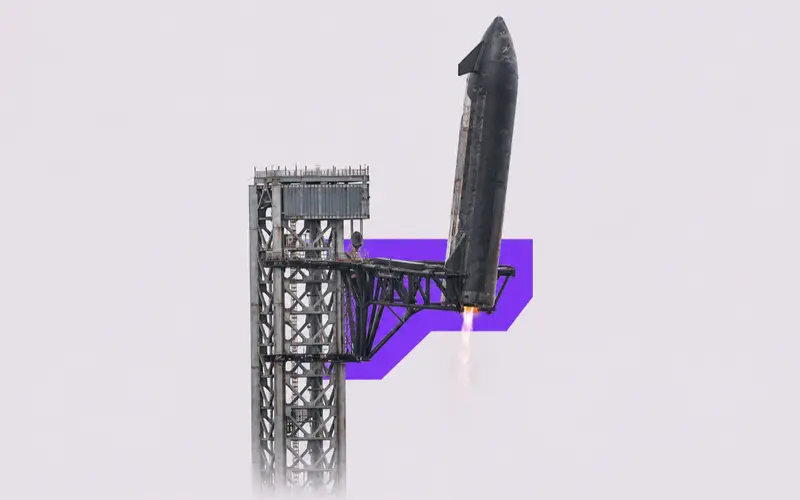
SpaceX first caught its returning Starship upper stage at Starbase, Texas, on November 14 after approximately 22.5 hours in space and 14 orbits of Earth. Returning to its launch site, the spacecraft was secured above the ground by two mechanical tower arms. The achievement advanced the company's ambition for a reusable launch system, without establishing that such a system is operationally ready.
The fifteenth test flight launched on November 13 and deployed 26 Starlink satellites after reaching orbit. During atmospheric re-entry, heat-resistant tiles protected Starship as it approached at around 27,000 kilometres per hour. The spacecraft subsequently slowed, adjusted its orientation and fired its engines before the catch.
The outcome was mixed. A navigation problem prevented the Super Heavy booster from returning to the tower, and it was lost over the Gulf of Mexico. Earlier booster catches therefore do not amount to recovering both stages in a single mission; that milestone remains unachieved.
Nor does recovery alone demonstrate economical reuse. Engineers must establish that inspection, repairs and preparation for another launch require manageable effort, particularly for the heat shield. NASA plans to use a Starship variant for lunar missions, while SpaceX hopes to reach Mars. Those ambitions also require solving problems such as transferring fuel between spacecraft in orbit. The catch demonstrates return capability, not readiness for routine space travel.