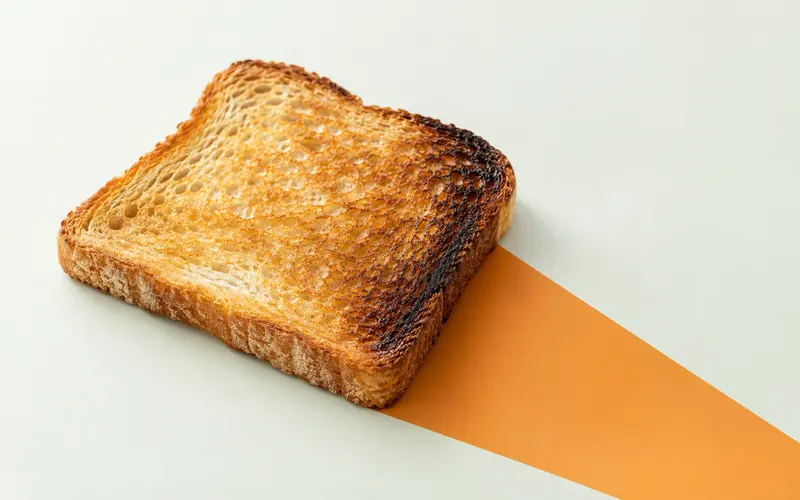
Should You Avoid Eating Burnt Food?
Thursday, October 8, 2026209 words3 minutes3133 reads
Burnt food has become a simple health warning, but the evidence needs careful reading. Acrylamide is a chemical that can form when sugars and asparagine in plant-based food react during high-temperature, low-moisture cooking. The reaction helps create browned color, smell, and flavor. It is more likely with frying, roasting, and baking; boiling and steaming usually form far less.
The concern is based on toxicology. Acrylamide and its metabolite glycidamide damaged DNA and caused cancer in animal studies at high doses. The European Food Safety Authority says this can be a health concern, particularly because people are exposed to acrylamide in many ordinary foods. Children have higher exposure per kilogram of body weight, it says.
This does not prove that burnt toast causes cancer in people. Human epidemiology is limited and inconclusive. Diet questionnaires often cannot estimate individual exposure well, because amounts vary by recipe, temperature, and cooking time. Smoking also supplies acrylamide and can confuse studies.
Risk reduction is therefore a cautious step, not a guarantee or a reason to avoid every browned food. FDA advises a healthy eating pattern rather than stopping fried, baked, or roasted foods. Cooking starchy food to a lighter color and avoiding unnecessary overcooking can reduce formation, while leaving the human cancer question open.