NASA Will Search for Caves on the Moon
Saturday, October 10, 2026197 words3 minutes2839 reads
NASA selected three payload suites through its PRISM programme to help prepare for Moon Base, a future sustained lunar outpost. The investigations will study resources, environmental hazards, and natural shelters before NASA sends people to live and work there for longer periods.
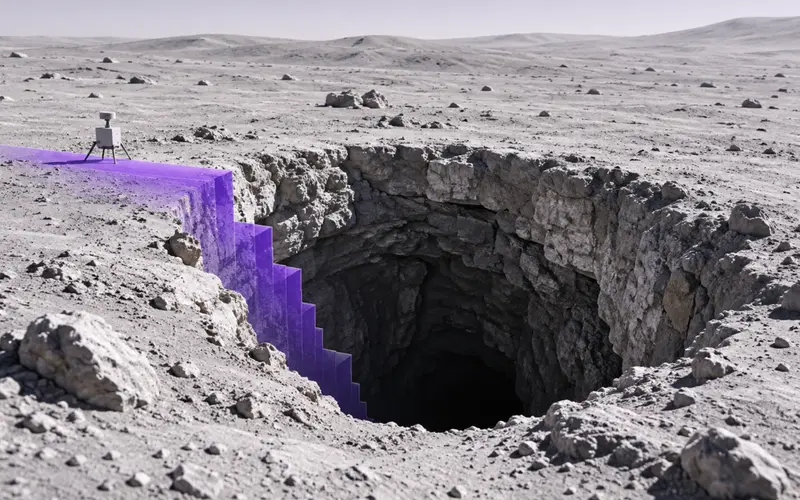
The Geophysical Investigation for Mapping Lunar Interior, or GIMLI, will work at Marius Hills Pit. It will scan under the lunar surface to determine whether the pit opens into a large lava tube. Lava tubes are underground spaces created by past volcanic activity. NASA says a confirmed void could offer future astronauts ready-made protection from extreme temperatures, ionizing radiation, and micrometeoroid impacts.
That is a potential benefit, not a confirmed home. The project must first determine whether a large tube exists, and later planners would still need to assess its size, stability, access, and safety. Mapping a possible shelter is different from proving that people can live there.
The other payloads add context. LEMS-SP will monitor the lunar environment, including micrometeoroids and seismic events. DISCO will study ice in micro-cold traps and how the surface behaves during operations. NASA says these results will help reduce risks and support safe, long-term activity at the Moon Base.