Why Does a Drug’s Shape Matter?
Sunday, October 11, 2026219 words3 minutes2064 reads
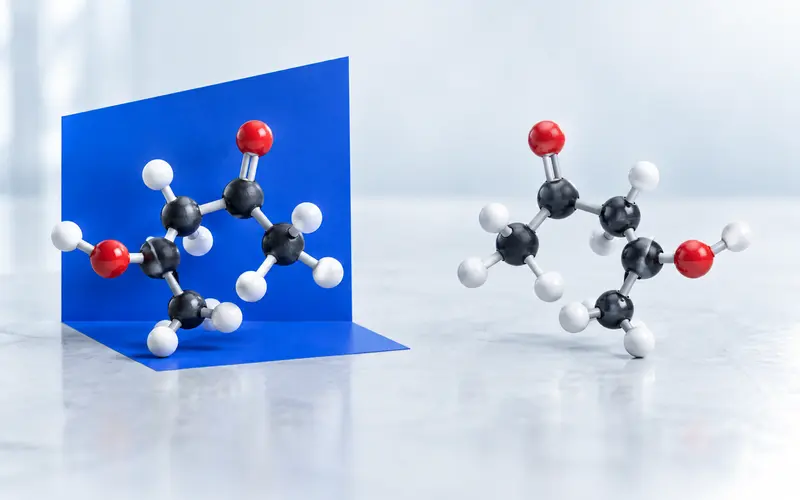
Molecules essential to life can exist in two mirror-image forms. They have the same atoms, but their three-dimensional shapes differ, much as left and right hands do. This property is called chirality. Chirality means a mirror image cannot be placed exactly on top of the molecule. A molecule’s shape affects how it interacts with other molecules, so mirror forms can have different properties. The two forms of carvone, for example, are associated with mint and caraway smells.
The difference matters in medicine. A drug’s mirror forms may act differently in the body. Chemists therefore need methods to make a chosen form for a purpose.
On October 7, the 2026 Nobel Prize in Chemistry went to Henri B. Kagan of France and Kenso Soai of Japan. Kagan’s work in the 1980s showed that reactions could be designed to produce more of one mirror form. Soai later developed a reaction that efficiently produced only one form, now called the Soai reaction. Their discoveries showed how chemical reactions can be pushed toward one molecular shape and gave pharmaceutical researchers useful tools.
Life favors mirror forms: human proteins are built mostly from left-handed amino acids. The prize-winning work helps show how a preference can arise through chemistry. The question of how life first developed this preference remains open. Scientists continue to study it.