Himalayan Ice Loss Puts India’s Economy at Risk
Wednesday, September 16, 2026220 words3 minutes273 reads
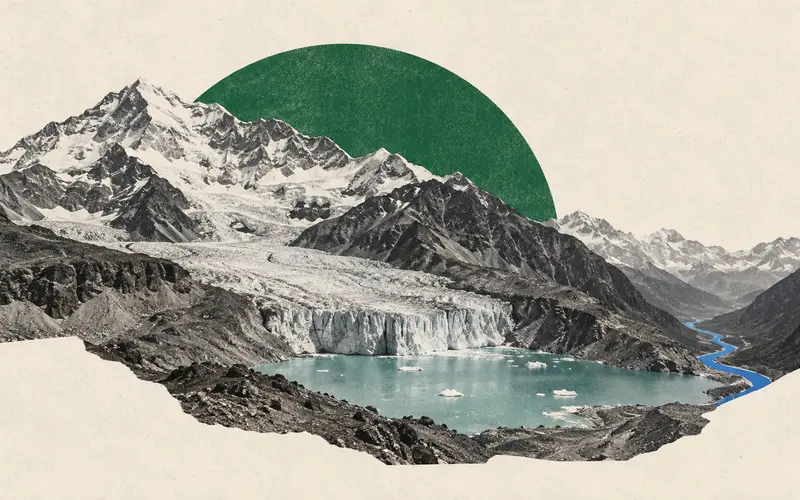
The Himalayas should be treated as vital infrastructure, according to a recent Systemiq report produced with regional partners. Its central warning is that accelerating glacier loss, unstable glacial lakes and thawing mountain ground can create cascading hazards for communities and infrastructure downstream. The report says Himalayan glaciers are losing mass 65% faster than a decade ago and identifies 56 Indian glacial lakes as very high risk.
Its economic claim needs careful reading. Systemiq estimates that Himalayan water underpins roughly 20% of India’s GDP when its full downstream reach is counted. This is an estimate of dependence across water, food and economic systems; it is not evidence that glacier loss alone will remove 20% of GDP. The report says mountain states capture about 5% of that value.
The authors highlight black carbon as a potentially addressable pressure. They estimate that it drives roughly a third of Himalayan glacier melt, largely through pollution from brick kilns in the plains. This attribution comes from the report and should not be read as assigning all melting to one source.
Systemiq proposes monitoring, early-warning systems, cleaner industry and a different growth model. ICIMOD also argues for cross-border risk information and joint investment. The practical lesson is not that one number predicts the future, but that mountain risks, water security and regional economies are tightly connected.