Did Tesla Really Make a Flying Car?
Sunday, October 18, 2026211 words3 minutes264 reads
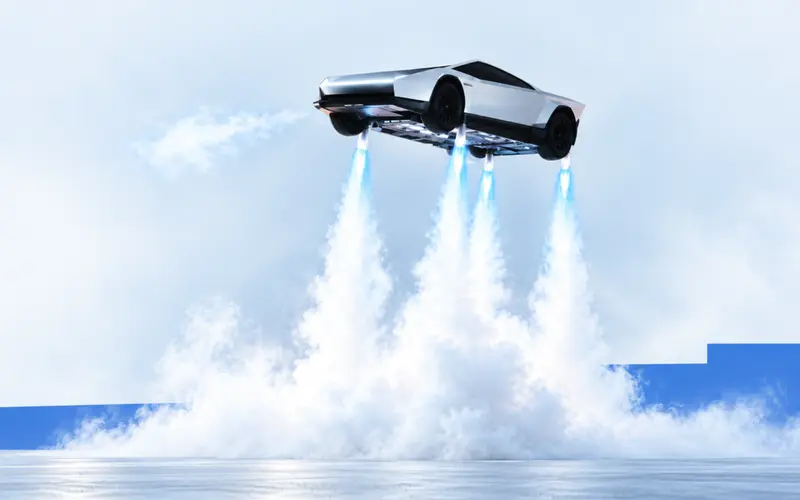
Tesla's new Roadster did leave the ground during an October 15 demonstration at SpaceX's Texas test site. A version equipped with cold-gas thrusters rose, turned in the air and landed. It also cleared a row of vehicles. No person rode inside during these maneuvers. The car flew briefly but has not demonstrated ordinary air travel.
The system stores gas under high pressure and releases it through nozzles. The escaping gas produces thrust in the opposite direction, allowing the car to lift and change orientation. A separate suction system helped it drive upside down on a ramp. Neither system makes it equivalent to an aircraft that can carry passengers over long distances.
Tesla says some versions can reach 60 miles per hour from rest in under one second. Independent tests have not established how production cars will perform. The second-generation Roadster was announced in 2017, with deliveries initially expected in 2020. Tesla now targets production in 2028.
Practical use presents another challenge. Aviation experts told WIRED that a car leaving the ground would likely face approval and airspace rules. Elon Musk acknowledged that the flying feature might not be legal everywhere. The test therefore proves a short airborne maneuver under controlled conditions, while passenger use, regulatory approval and delivery remain open questions.