Can Dry Ice Clear Southeast Asia’s Toxic Haze?
Monday, October 19, 2026210 words3 minutes491 reads
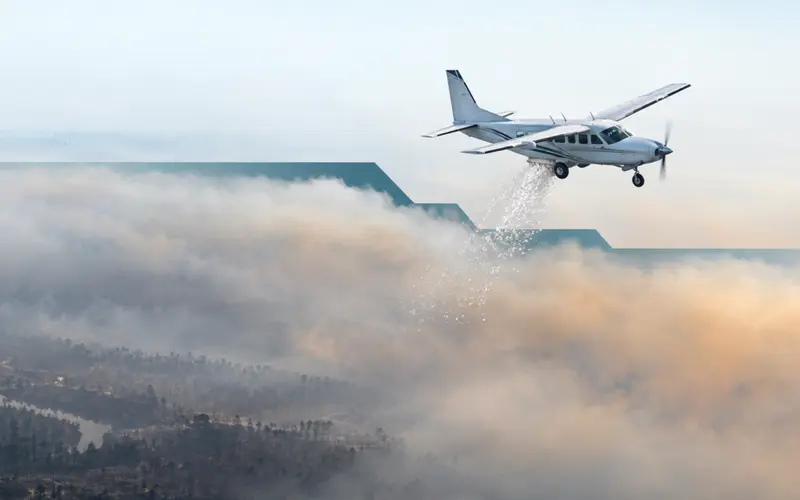
Indonesia is testing whether dry ice released from aircraft can reduce the haze caused by forest and land fires. On October 15, authorities began a trial over South Sumatra, with planes prepared to release about 1.5 tons of frozen carbon dioxide. They hope to improve visibility from around one to at least five kilometres. This is a target, not a result.
The idea concerns a temperature inversion. Normally, warm air rises and carries smoke upward. During an inversion, a warmer layer sits above cooler surface air, limiting that upward movement. Officials hope dry ice will cool or disturb the upper layer enough for trapped smoke to rise. Whether this works at useful scale remains unknown. This is the country's first trial of the technique for haze.
Even a temporary improvement would not extinguish the fires. Many burn on peatland: layers of partly decayed plants that can dry out after drainage and then burn beneath the surface. Cloud seeding aims to make rain and wet the land. Dry ice targets smoke already in the air; cloud seeding targets the conditions sustaining fires.
The haze has crossed borders, disrupting schools and travel. The trial may offer short-term relief, but preventing fires and protecting wet peatlands address the continuing source of the smoke.