The World Now Has More Older Adults Than Young Children
Friday, September 11, 2026176 words3 minutes4166 reads
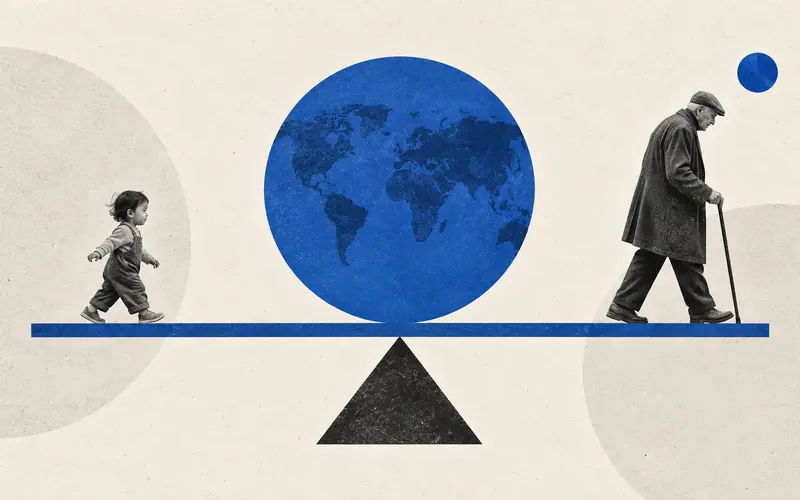
The world's age balance is changing. The Census Bureau reports that the share of people aged 65 and older passed the share of children aged 0 to 5 between 2020 and 2025. In 2025, older adults numbered about 852 million, or 10.5 percent of the global population.
The change has two main causes. People are living longer because of improvements in health care, education and living conditions. At the same time, fertility—the average number of children a woman has—is falling in many countries. In 2023, more than 71 percent of the world's population lived where fertility was at or below the replacement level of about 2.1 children per woman. In short, the two main causes are longer lives and fewer births.
Asia shows the trend clearly. Japan was the oldest country in 2025, with 29.7 percent of its people aged 65 and over. The Census Bureau projected that South Korea could become the oldest by 2060, when its older population may reach 41 percent. These changes may create pressure on pensions, health care and the workforce.