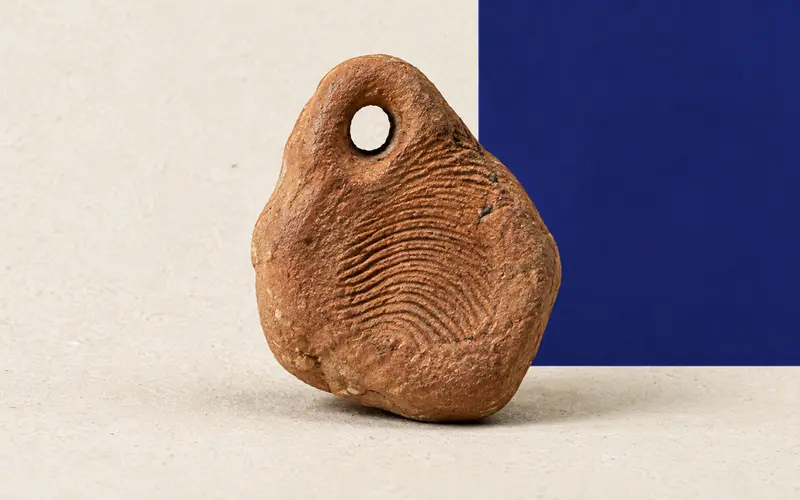
Ancient Clay Beads Hold Children’s Fingerprints
Wednesday, September 23, 2026174 words3 minutes372 reads
A fingerprint can turn an ancient object into a human story. Researchers studied 142 small clay beads and pendants from Natufian sites in what is now Israel. The ornaments are between about 11,650 and 15,000 years old.
The Natufian people were hunter-gatherers living before agriculture and pottery became widespread in the region. Yet they already used clay to make personal ornaments. The pieces included discs, rings, cylinders and bead shapes that copied plants such as barley, wheat, lentils and peas. Some were colored with red ochre.
Researchers identified about 50 fingerprints. By comparing the width of the fingerprint ridges with a modern experimental dataset, they estimated that adults, children and teenagers worked with the clay. Five ornaments had prints linked to children or younger people.
This does not show exactly what each child was taught or why every ornament was made. But it offers direct evidence that young people were makers, not only watchers. The study suggests that making ornaments may have been a shared activity where skills and social values passed between generations.