Why Is This Desert Museum Built Underground?
Sunday, October 25, 2026211 words3 minutes247 reads
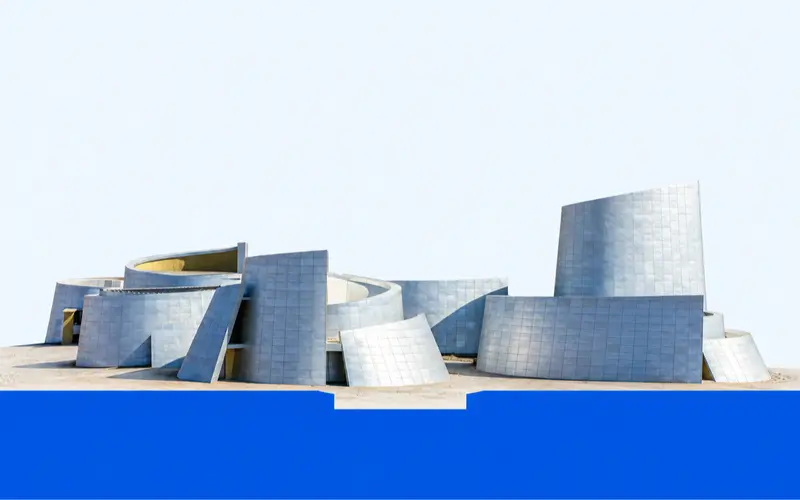
The Hami Pterosaur Museum, which opened in China's Gobi Desert in September 2026, combines visible silver forms with a largely concealed building. Most of its 8,000 square metres sit about eight metres below ground. Its exhibits include fossils of pterosaurs, flying reptiles distinct from dinosaurs.
The architects at Turenscape responded to an environment of intense summer heat, freezing winters and frequent sandstorms. Soil slows heat transfer, moderating temperature fluctuations underground. This can reduce heating and cooling demands while sheltering much of the structure from wind and airborne sand. Rather than eliminate mechanical systems, the design reduces dependence on them.
Ventilation passages exploit natural air movement: warm air rises and escapes while cooler air enters. Structures extending down from the surface admit daylight to the halls. A nearby solar facility and a system for collecting and reusing some water complement these measures.
The design team estimates electricity reductions of about 94% for air-conditioning and nearly 50% for artificial lighting relative to a conventional building above ground. Those projections are not confirmed savings from years of operation. Construction costs, soil conditions and climate also limit where underground building makes sense. The museum therefore illustrates an approach to adapting architecture to its surroundings, rather than a universal solution or proof of the projected savings.