Which Animals Could You Beat in a Race?
Tuesday, November 10, 2026215 words3 minutes1033 reads
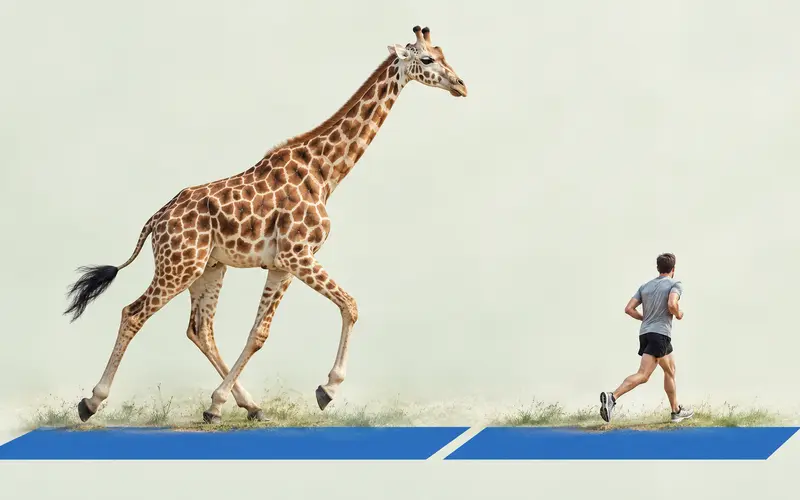
A giraffe's top speed of nearly 60 kilometres per hour exceeds Usain Bolt's peak of about 44, but comparing those figures cannot settle every race. A BBC Future article examines animal-speed research and explains why distance, acceleration and endurance complicate the question of which animals humans could outrun.
Body size does not guarantee greater speed. A 2017 study proposed that larger animals take longer to accelerate and may exhaust the muscular energy available for reaching top speed before achieving it. Equally misleading is comparing a person's sustained average with an animal's brief maximum: the numbers describe different performances, not a predicted race result.
Humans possess an endurance advantage in evaporative cooling. As sweat dries, it helps remove heat from the skin, allowing runners to remain active for longer. Cheetahs generally sustain their highest speeds for only seconds. Nevertheless, some dogs, including huskies, and horses trained for endurance can outperform people over long distances.
In Wales, humans and horses compete over a demanding course of roughly 35 kilometres. Horses usually win, though humans have occasionally finished first. Terrain and weather influence the outcome, as do the individuals involved. Animals also cannot simply be instructed to perform their fastest marathon, limiting comparisons. There is therefore no definitive ranking that tells every person which animals they would beat.