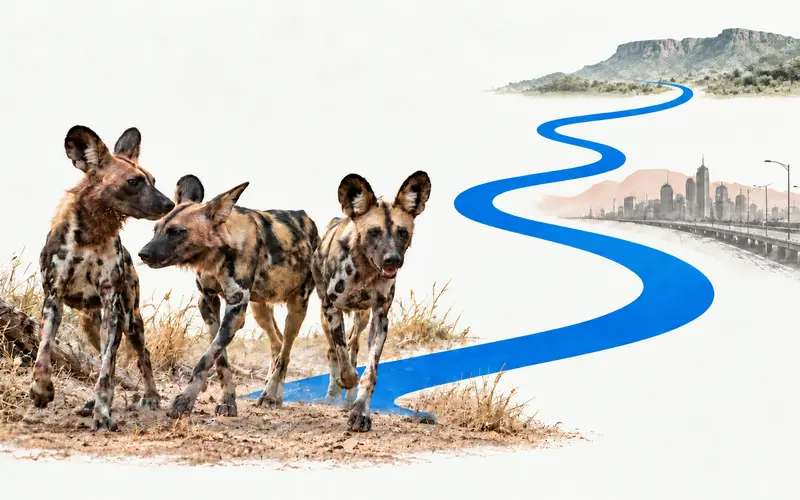
Three Wild Dogs Walked 4,126 Km to Find Mates
Monday, September 21, 2026217 words3 minutes246 reads
Three African wild dogs from Zambia’s Kafue National Park travelled 4,126 kilometers in nine months after leaving their pack in 2025. The study in Ecology calls this the longest recorded movement by an African land mammal and the longest known wild dog dispersal. By April 2026, the Mayukuyuku males had settled in the Luano Game Management Area of the Luangwa Valley ecosystem.
Dispersal is important for wild dogs because young adults need unrelated mates and a territory where they can form a pack. GPS collars let researchers map the brothers’ route through national parks, farmland and populated areas near Kitwe and Ndola. They did not end nearly as far from home as 4,126 kilometers.
The journey also shows danger outside protected areas. In a previous movement tracked by the same team, a female called EWD-1355 travelled more than 2,300 kilometers with two sisters before she was killed in a wire snare. Roads, domestic-animal disease, conflict with people and habitat loss add risks.
The data supports protecting wildlife corridors: safe routes between ecosystems. Yet researchers stress that movement is not the same as connection. Unknown wild dogs may fight, and a travelling group may fail to join another pack. Corridors can give animals the chance to move, but conservation still needs to make the journey and settlement safer.