The World Now Has More Older Adults Than Young Children
Friday, September 11, 2026220 words3 minutes4166 reads
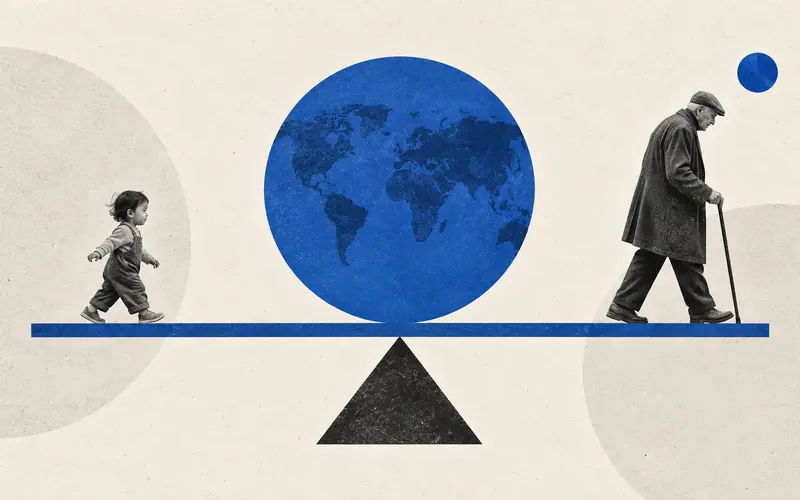
A demographic crossover has arrived: people aged 65 and over now outnumber children aged 0 to 5 worldwide. The Census Bureau says this happened between 2020 and 2025, a first in recorded history. In 2025, older adults numbered 852 million, or 10.5 percent globally. Their share could reach 19.6 percent by 2060, nearly one in five.
This is a story about longevity and low birth rates. Health care, education and living conditions help more people reach old age. In 2023, over 71 percent of people lived in countries at or below replacement fertility, about 2.1 children per woman. Each younger cohort may need to support larger older generations.
The picture is complex. Europe will remain the oldest region by share, but Africa could have more older people in total by 2060—249 million compared with Europe's 214 million—because Africa's population is growing faster. Japan was the world's oldest country in 2025; South Korea is projected to lead by 2060, with older adults at 41 percent of its population.
The shift may increase demand for pensions, health and long-term care, and reduce the supply of workers. Yet it creates an opportunity to rethink retirement, flexible work and age-friendly communities. The report says it is not automatically a crisis. The real challenge is building systems that support people across a longer life course.