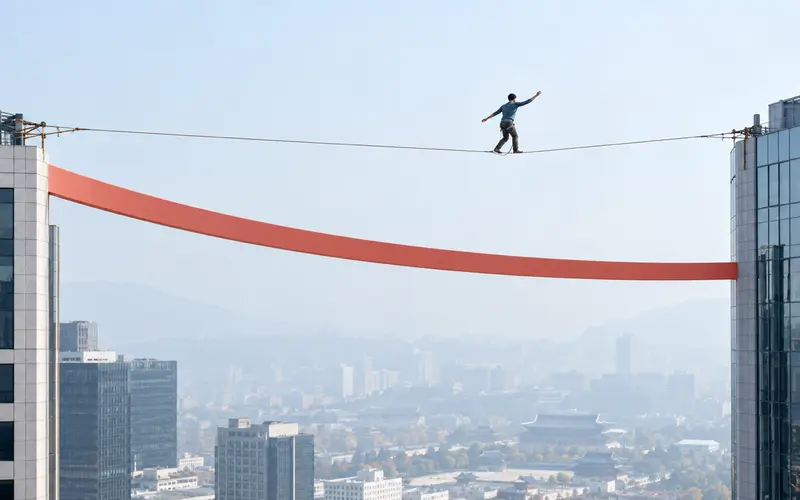
Slackliner Crosses Line Between Seoul Buildings
Monday, October 5, 2026200 words3 minutes2027 reads
On October 1, Estonian slackliner Jaan Roose completed a 160-metre highline crossing between two buildings in central Seoul. He walked between the Koreana Hotel and the Dong-A Media Center, about 120 metres above the ground. It was described as Korea's first urban highline performance.
Highlining uses a flat, flexible line that can move under a walker. This makes the sport a clear example of balance in action. A walker watches the line and the space around it, makes quick changes with the arms and legs, and tries to keep a stable posture. Wind can add another challenge by making the line sway.
The body uses several systems to keep balance. The eyes give information about the world around us. The vestibular system in the inner ear senses head movement and gravity. Muscles and touch sensors in the legs report what the body is doing. The brain combines these messages to control posture during movement.
If these signals disagree or do not work well, a person can feel dizzy, unstable, or as if they are moving. Roose's crossing shows why balance is more than strong feet. Balance needs the eyes, inner ear, muscles, and brain to work together again and again.