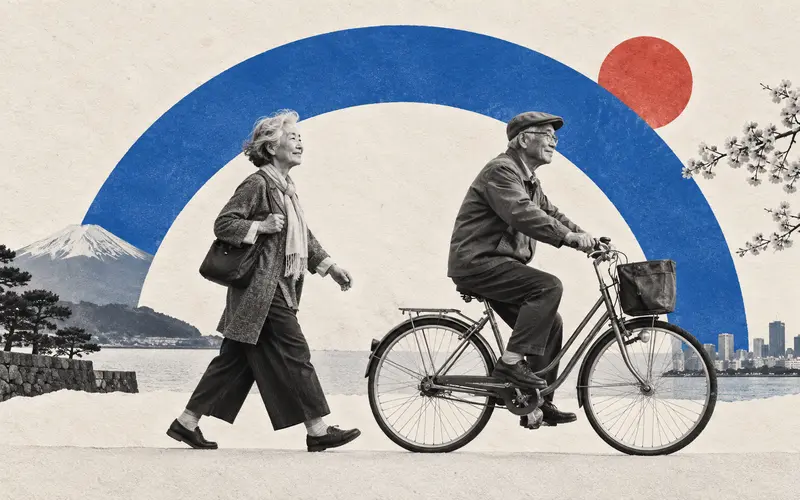
More Than 100,000 People in Japan Are 100 or Older
Thursday, September 17, 2026219 words3 minutes397 reads
Japan is home to 107,677 centenarians, the first time its total has exceeded 100,000, the health ministry says. The figure is the highest in the world, and women account for 88%. Kishimoto Fuyo, 114, from Kyoto City, is the oldest woman; Kato Hikaru, 112, from Kumamoto, is the oldest man.
Health Minister Kenichiro Ueno said medical and technological progress had helped many people live long, healthy, active lives. Researchers often associate Japanese longevity with diets based on fish, vegetables, and rice, lower in saturated fat than many Western diets. Daily movement—walking, cycling, stretching, and using public transport—may matter too. These are possible contributing factors, not a guarantee that any individual will live longer.
The achievement sits beside a population imbalance. Japan’s total fertility rate reached a record low of 1.14 last year, compared with 2.1 births per woman needed for replacement. Japan’s population could fall from its 2008 peak of 128 million to 87 million by 2070, while the share aged 65 or older is projected to approach 40%. That raises pressure on a sustainable social security system.
There is an important caveat. In 2010, an audit found more than 230,000 listed centenarians unaccounted for, exposing patchy records and possible pension fraud. The new count marks a milestone, but it should be read alongside the limits of historical record-keeping.