Mexico Remembers Loved Ones with Flowers and Altars
Monday, November 2, 2026204 words3 minutes275 reads
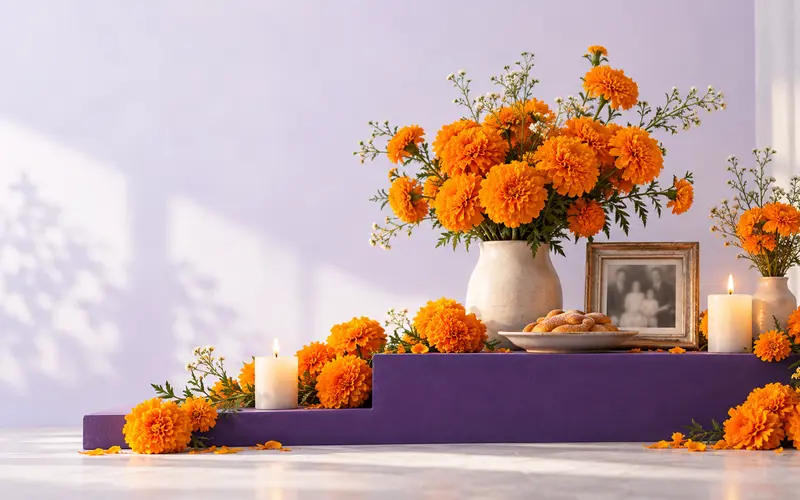
Across Mexico, orange marigolds, candles and skeleton face paint signal the arrival of Day of the Dead celebrations. Festivities begin in October and culminate on November 1 and 2. Although Mexico City's parades offer a highly visible spectacle, domestic altars reveal the festival's more intimate relationship with family memory.
Families arrange photographs, flowers, candles and offerings to honour deceased relatives. Favourite dishes make the preparations personal: the person being remembered helps determine what is placed on the altar. Marigolds, known in Mexico as cempasuchil, have a particular symbolic role. Their vivid colour is traditionally believed to guide returning souls home. That return belongs to religious and cultural belief; it should not be presented as evidence of physical resurrection.
The practices bring together Indigenous traditions and Catholic influences, while retaining differences between communities. Mexico's cultural authorities describe the Indigenous festivities as deeply embedded in community life. Their significance therefore extends beyond a colourful display for spectators.
Seen in this context, an altar is more than a collection of decorations. Its food and photographs connect remembrance to the details of an individual life. The public celebration and the private act of remembering coexist, but neither a parade nor a single altar can represent every community's observance.