Cyborg Roaches Tested for Disaster Medicine
Wednesday, September 2, 2026220 words3 minutes3106 reads
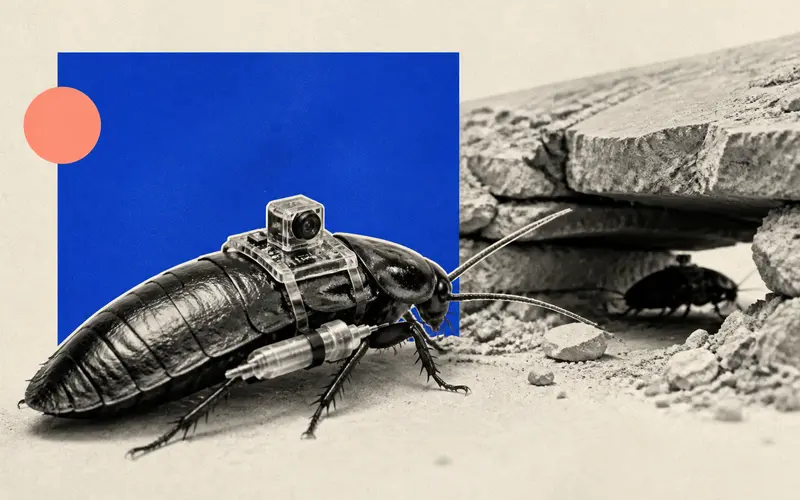
Biorobotics researchers at the University of Queensland, working with UNSW biomedical engineers, have developed cyborg cockroaches for emergency missions. Their North Queensland giant burrowing cockroaches carry electronics: cameras for visual feedback or remotely activated auto-injection systems. The team calls them "paraborgs".
An implanted electrode allows an operator to apply small electrical signals to the insect's nervous system and steer it. The research separates roles: an observer cockroach can locate a target with its camera, while another can carry a syringe cylinder. The researchers say this could extend emergency medicine into narrow, debris-filled spaces that rescuers cannot safely enter. Critical medical decisions would remain under human supervision.
The results are promising but qualified. The insects reached designated checkpoints in all controlled trials. Across the complete navigation-and-injection task, success was 72%. Close-range injection reached as high as 95% only when the cockroach was positioned within 15 centimetres of the target. Those figures describe proof-of-concept laboratory tests, not performance in a collapsed building.
The experiments used silicone targets and pig skin. Before a real deployment, the system must address complex terrain, signal loss and injection safety. The researchers imagine specialised swarms, with some insects carrying cameras or environmental sensors and others carrying medical equipment. Their aim is to give first responders another way to see and reach trapped people, rather than replace them.