China Grows Wheat from Space-Harvested Seeds
Tuesday, September 29, 2026218 words3 minutes908 reads
China has cultivated 14 plant species and more than 20 varieties aboard the Tiangong space station, according to the Astronaut Center of China. The orbital garden includes lettuce, carrots, sunflowers, potatoes, and wheat. The work is intended to build experience for larger-scale crop production in space.
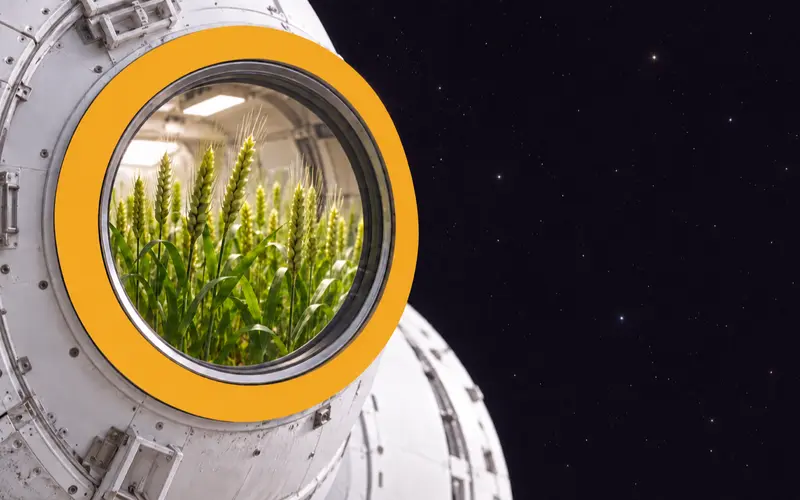
Wheat offers a notable step. It completed a full growing cycle in orbit, from seed to mature plant and back to seed. Researchers have now planted seeds from that harvest. This second round was growing well and was close to reaping when Xinhua reported the news on September 20. It does not say the station can already feed its crew by itself.
Two plant-growing systems are operating on Tiangong: substrate culture and aeroponics. In aeroponics, roots are not held in traditional soil; they receive water and nutrients through a fine mist. The station’s experiments also help researchers study controlled life-support systems that could regenerate air, water, and some food, reducing dependence on supplies launched from Earth.
On long missions, resupply can become difficult, and growing crops could reduce dependence on supplies from Earth. China says it aims to create a lunar vegetable garden as exploration advances. Growing crops in orbit is still an experiment, but the second wheat crop shows how a harvest could provide seeds for another planting far from Earth.