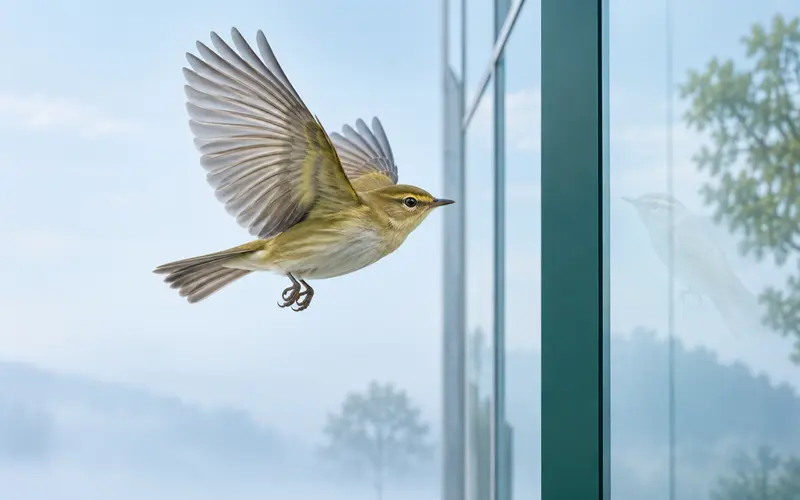
Beijing Glass Walls Endanger Migrating Birds
Wednesday, September 30, 2026208 words3 minutes2380 reads
In September, a birdwatcher in Beijing found an Arctic warbler dead beside an office complex in Wangjing. Its likely cause of death was collision with large glass façades, which can be almost invisible to birds.
Reflections of sky or trees may look like open air, while transparent windows can reveal plants beyond them. China’s first nationwide citizen-science collision project surveyed 3,078 buildings between 2021 and 2023. Migratory and smaller species were more often collision victims; buildings with greater glass coverage also had more collisions. The findings describe associations, not proof that glass alone explains every strike.
Autumn brings heavy migration, including first journeys by young birds. In the Chinese study, artificial light at night was associated with increased collision risk in autumn, although its overall effect was marginal. Hidden deaths make counts uncertain: some strikes leave no visible evidence, and injured birds can die later. A U.S. estimate based on field observations and later injuries put annual window-collision mortality at 1.28 to 3.46 billion birds; it is an estimate, not a direct count.
One response is to make glass visible. Markings should cover the outside surface, with spaces no greater than about five centimeters; a single large hawk decal leaves gaps. The Wangjing complex has begun testing stickers.