An Artist Uses Living Bacteria to Create Photographs
Wednesday, November 18, 2026219 words3 minutes835 reads
At Paris Photo 2026, Lara Tabet's work connected photographic image-making with biological activity. A medical biologist as well as an artist, Tabet developed the project with curator Yasmine Chemali, using microorganisms from waters around Marseille. The city is represented through material traces of its aquatic communities rather than conventional urban scenes.
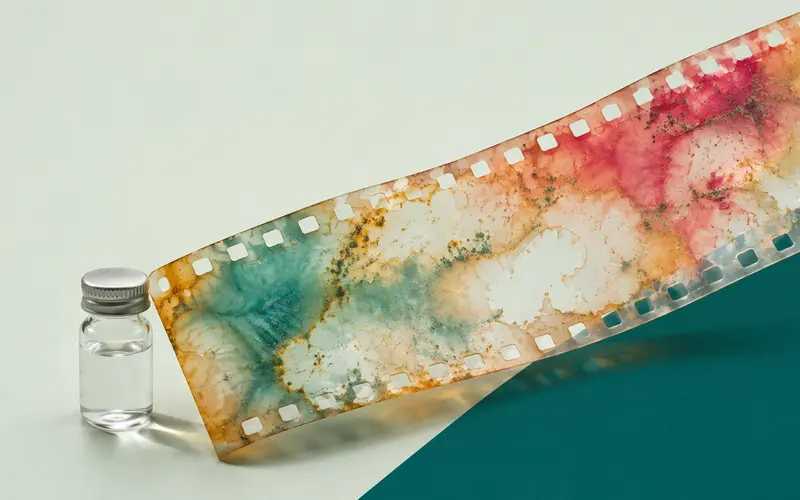
Bacteria alter photographic film's gelatin layer, generating abstract configurations as they interact with its light-sensitive material. This is not simply microscopy translated into art: the organisms participate in producing the image, rather than merely appearing as its subject. Tabet provides conditions for a process whose details she cannot completely predetermine.
The distinction between image and exhibited object matters. In one approach, the biological process is halted, the film digitised and the result printed onto glass. New bioplastic supports, incorporating photographic materials, can instead remain susceptible to further change. This does not mean every finished piece contains active organisms or that a glass reproduction will keep evolving biologically.
Such work challenges the expectation that a photograph preserves a completed moment. For a changing material, duration belongs to the work itself, raising questions about what an owner or institution should preserve. The project places human authorship alongside living processes without erasing the artist's decisions. A preserved record of bacterial activity and an evolving biological artwork are related, but distinct, outcomes.