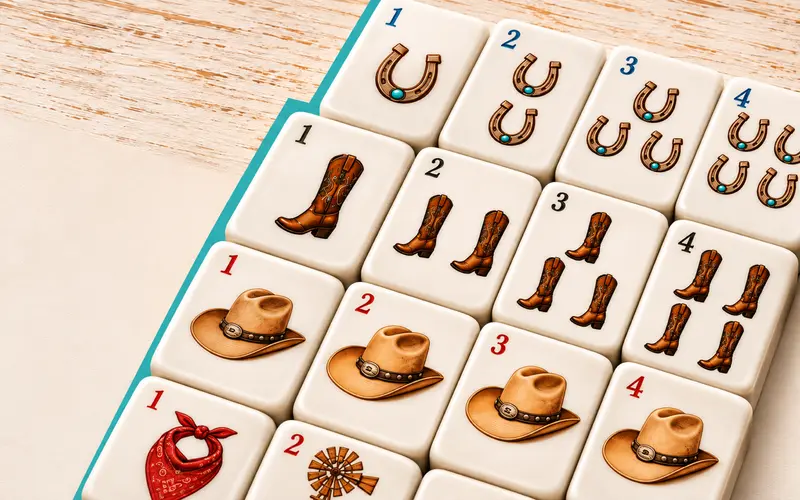
Cowboy Boots on Mahjong Tiles?
Friday, November 27, 2026214 words3 minutes1082 reads
A cowboy boot on a mahjong tile can look like an invitation to one player and a loss to another. Mahjong tables are drawing crowds in the United States again. What divides some players is the meaning of replacing images that once made a set instantly recognizable to their families.
Mahjong developed in nineteenth-century China and reached a wide American audience in the early 1920s. The National Mah Jongg League was founded in New York in 1937. Its rules won a following among Jewish American women, whose regular games helped sustain friendships. The card that lists winning combinations is itself a reminder of how much a game can change as it travels.
Yet a change in imagery can touch a different nerve. In 2021, The Mahjong Line faced criticism for replacing traditional markings with English words and illustrations. Some Asian Americans saw an implied judgment that the original designs needed improvement. For a player who associates the clatter of tiles with Lunar New Year at a grandparent's table, a familiar pattern carries a family history.
Other players see the growing audience as a chance to introduce people to Chinese culture. For someone drawn in by the boots, the question of what used to be on the tile could be the start of that conversation.